
What Does a Public Speaking Coach Actually Do? (And How to Know If You Need One)
By Victoria Lioznyansky, M.S., M.A. | Updated: May 24, 2026
You know your material cold. You have prepared. You have rehearsed. And yet, the moment you walk into the room, the moment all eyes land on you, something changes.
Your heart starts racing. Your thoughts become harder to access. The confidence you felt ten minutes earlier suddenly disappears.
And what makes this experience so frustrating is that it has nothing to do with competence.
All of the professionals I work with are exceptionally capable. Senior leaders. Founders. Executives. People who are highly respected in their industries and deeply knowledgeable in their fields.
And still, when the spotlight turns toward them, something changes.
They overthink, rush, lose clarity, or they avoid visibility altogether, despite knowing they are great at what they do.
If that sounds familiar, you are not alone.
More importantly, you are not dealing with a lack of expertise or experience.
You are dealing with a gap between who you are in your day-to-day “core” work and who you are when you speak with all eyes on you.
That gap is exactly where the right public speaking coach can help.
Because contrary to popular belief, great public speaking coaching is not just about teaching presentation techniques or helping you “look confident.”
The deeper work is learning how to stay connected to yourself when the stakes feel high, so your expertise, thinking, and presence remain available to you in the moments that matter most.
In this article, I’ll walk you through:
- what a public speaking coach actually does
- how to tell whether coaching could help you
- what separates surface-level coaching from real transformation
- and what the coaching process actually looks like when the goal is lasting confidence, not temporary performance improvement

Hi, I’m Victoria Lioznyansky, a TEDx speaker, leadership presence and public speaking confidence coach, and founder of Brilliant Speakers Academy®. I help senior professionals and leaders communicate with calm authority under pressure, without faking confidence, relying on performance tricks, or pretending to be someone they’re not.
What Is a Public Speaking Coach?
A public speaking coach helps people communicate with more clarity, confidence, and authority in situations where their voice matters. That may be a board meeting, a keynote, a job interview, a team presentation, a panel discussion, or an impromptu moment in a leadership meeting.
But this is where many people misunderstand what public speaking coaching is.
Most people imagine a public speaking coach as someone who teaches you how to stand, gesture, project your voice, organize your slides, or pause in the right places. Those skills can be useful, but they are not the whole picture.
For many professionals, the real issue is not technique.
The real issue is what happens internally the moment all eyes are on them.
You may know exactly what you want to say. You may be prepared. You may have years of experience. And logically, you may understand that the situation is not actually dangerous.
But if your brain perceives public speaking as a threat, it will still send fear signals: foggy thinking, racing heart, sweaty palms, shaky voice, tight throat, or that sudden feeling that you cannot access what you know.
A technique-focused public speaking coach helps you improve how you present.
A transformational public speaking coach helps you change how you experience speaking in the first place.
That distinction matters.
Because when you are only taught how to appear confident, you have to keep performing confidence. But when you learn how to feel genuinely confident from the inside out, your delivery, presence, and authority begin to shift naturally.
5 Signs You May Need a Public Speaking Confidence Coach
Not everyone who wants to improve their speaking needs the same kind of support.
Some people simply need help with structure, delivery, or slide flow. But if your challenge goes deeper than technique, working with a public speaking confidence coach can help you address the patterns that keep showing up when all eyes are on you.
Because no amount of hacks, tips, or presentation techniques will dramatically change your experience if anxiety is still there underneath it all.
Here are five signs that coaching may be the right next step.
#1: You avoid volunteering to present, even when you know the material better than anyone
There is an opportunity at work. A presentation to leadership. A project update. A chance to be visible.
You know the content. In fact, you may know it better than anyone else in the room.
And still, you do not raise your hand.
Maybe you tell yourself it is not the right moment. Maybe you let someone else step up. Maybe you take on every part of the project except the part that requires speaking in front of the group.
This pattern can quietly limit your career, because the professionals who advance are not always the ones who know the most. They are often the ones who are visible, clear, and trusted in the moments that matter.
When you stay invisible, your expertise stays invisible too.
#2: You know you are not being seen as the leader or expert you are
You may get through the presentation. You may even receive polite feedback afterward.
But deep down, you know you are not showing up at the level you are capable of.
You sound more hesitant than you feel. You soften your points. You rush through ideas that deserve more space. You explain too much, or not enough. And by the end, people may understand the information, but they do not fully experience your authority.
This is one of the clearest signs that you may need a public speaking confidence coach.
Because the goal is not simply to survive the presentation or avoid mistakes. The goal is to speak in a way that makes your expertise visible.
When people do not see you as the leader or expert you are, the problem is not your knowledge. It is the gap between what you know internally and what others can perceive externally.’
#3: You rehearse obsessively, but still freeze when it counts
You have prepared. You have practiced. You have gone over your notes again and again.
You know the presentation.
And then the moment arrives, and something in you shuts down.
Your brain gets foggy. Your heart starts racing. Your voice may shake. You are suddenly more focused on how you are doing than on what you came to say.
This is where many people misunderstand the problem.
Preparation and confidence are not the same thing.
You can be fully prepared and still feel anxious if your brain perceives public speaking as a threat. In that case, more practice usually does not solve the issue. As you continue putting yourself into situations where all eyes are on you, you may simply reinforce the pattern of speaking while anxious.
What is needed is not more rehearsing and practice.
It is a completely different relationship with visibility, pressure, and being seen.
#4: The dread starts days before and takes over time that should belong to your life
It is Saturday. You are with your family, at dinner, at an event, or trying to relax.
But you are not fully there.
Because Monday morning, you have a presentation.
The dread has already moved in. It follows you through the weekend. It shows up when you wake up. It sits in the background while you are trying to enjoy your life.
This is one of the most painful parts of public speaking anxiety, and it is also one of the least talked about.
It is not just the moment you speak. It is the anticipation. The mental rehearsing. The overthinking. The way one presentation can take up days of emotional space before it even happens.
When speaking anxiety overshadows your personal life like this, it is usually a sign that the issue runs deeper than technique.
#5: The moment all eyes are on you, your imposter syndrome kicks in
You step up to speak. You are prepared. You know your content.
And then the thoughts begin.
Who am I to be presenting this?
What are they thinking of me?
What if I make a mistake?
What if they realize I am not as good as they think?
In a moment, your attention shifts away from your message and onto yourself.
You are no longer fully connected to the audience. You are monitoring every word, every pause, every facial expression, every sign of nervousness.
This is where public speaking anxiety and imposter syndrome often overlap.
It does not matter how senior you are, how much experience you have, or how many presentations you have given. If those thoughts take over every time the spotlight is on you, they will continue affecting how you speak until they are addressed at the root.
The goal is not to force yourself to silence that voice and keep on pushing through.
The goal is not to force yourself to silence that voice.
The goal is to change the beliefs and internal patterns that give it so much power in the first place so that you can simply speak with confidence.
What Makes a Public Speaking Coach Actually Effective
Most public speaking advice and traditional public speaking training fall into one of two categories.
The first is technique-based: use this structure, gesture more intentionally, stand this way, make eye contact, speak louder, pause for effect.
The second is mindset-based: just be confident, fake it till you make it, imagine the audience in their underwear.
Some of this advice may help at the surface level. But it rarely creates lasting change for someone who feels anxious, small, or disconnected the moment all eyes are on them.
The reason is simple. Surface-level advice focuses on what the audience sees. Real transformation focuses on what you experience internally while you speak.
That is the difference.
If your brain still perceives visibility as a threat, a stronger posture will not create true confidence. If you are still questioning whether you belong in the room, more rehearsal will not automatically make you feel like an authority.
A public speaking coach who creates lasting change does more than polish delivery. They help you change the internal patterns that affect how you show up under pressure.
That work includes:
- addressing the root of the fear instead of simply managing symptoms
- changing the beliefs that trigger anxiety in high-stakes moments
- building genuine confidence, not a “performance” of confidence
- creating new speaking habits so confidence becomes natural and permanent, not forced
When confidence is built from the inside out, everything else begins to align. Your presence, delivery, and ability to connect with your audience become less effortful because you are no longer trying to perform confidence. You are speaking from it.
If your confidence disappears the moment you step into a high-stakes room, this explains why. In this short video below, I break down the real reason visibility triggers internal friction and why surface-level leadership tips don’t fix it.

What Working With Me as Your Public Speaking Coach Actually Looks Like
In my work with corporate leaders, executives, entrepreneurs, and high-level professionals, I use my proprietary Anxiety-to-Authority™ Framework, a four-pillar method I developed from my own journey overcoming public speaking anxiety and from coaching hundreds of professionals through the same transformation.
This framework is designed to help you move from feeling anxious, self-conscious, or disconnected when you speak to showing up with genuine confidence, authority, and presence.
The four pillars are Conquer, Craft, Connect, and Coach.
Pillar 1: Conquer
This is the foundation.
Conquer is about overcoming public speaking anxiety at the root, not managing it, hiding it, or forcing yourself through it.
This is where we work on the internal patterns that make speaking feel unsafe in the first place. That includes imposter syndrome, the beliefs that make you question yourself when all eyes are on you, and the subconscious associations that tell your brain the spotlight is dangerous.
Until this foundation is addressed, everything else is harder. You can learn structure, delivery, and audience engagement, but if anxiety is still running underneath, you will still feel like you are fighting yourself.
Conquer is where confidence becomes internal and real, not performed and fake.
Pillar 2: Craft
Once confidence is being built from the inside out, the next step is Craft.
Craft is about creating a message that is clear, memorable, and impactful. This is not about adding more content, more slides, or more information.
In fact, it is often the opposite.
Great speaking is not about proving how much you know. It is about helping your audience understand, feel, and remember what matters.
In this pillar, we work on shaping your message so people do not just listen politely, but actually lean in. They follow your thinking. They feel the relevance. They walk away with something that stays with them.
That is the difference between giving information and creating impact.
Pillar 3: Connect
Most presenters deliver information to their audience.
Strong speakers create a connection with their audience.
Connect is where we work on your ability to read the room, engage people in real time, respond to what is happening, and make even a large presentation feel like a conversation.
This is not about becoming more charismatic or more extroverted. Connection is a skill. It can be learned.
It comes from being present enough to notice your audience instead of being trapped inside your own head.
When you are connected, your audience feels it. They do not just hear your words. They feel like you are speaking to them.
Pillar 4: Coach
The final pillar is Coach, which really means self-coaching.
This is your ability to prepare yourself mentally and logistically for any speaking situation, including unexpected questions, difficult audience dynamics, or moments where things do not go according to plan.
Most people know how to prepare slides. Very few know how to prepare their internal state.
They may rehearse content, but they do not know how to prepare their focus, their presence, or their ability to respond when something unexpected happens.
This pillar helps you walk into meetings, presentations, panels, interviews, and impromptu speaking situations with more calm, steadiness, and self-assurance. Not because everything will go perfectly, but because you know how to bring yourself back to confidence and authority in real time.
That is what makes the framework sustainable.
You are not just learning how to give one better presentation. You are learning how to become the kind of speaker who can walk into any room and know how to show up, lead, and create impact.
FREE GUIDE
We respect your inbox. No spam. Unsubscribe anytime.
What Transformation Can Actually Look Like
Transformation is not abstract. When the right work is happening, people experience real shifts in how they speak, show up, and relate to visibility.
I want to share two examples.
One of my clients, Roos, is an entrepreneur and introvert who had been running businesses for more than twenty years. She came to me because visibility was becoming essential for her business, but speaking on camera, hosting livestreams, and doing interviews felt deeply uncomfortable.
After working through my program, she recorded a LinkedIn video in one take. Within a year, she launched her own podcast. She later told me that speaking started to feel almost natural, something she never imagined would be possible. Her exact words were, “It feels really freeing.”
Another client came to me just days before speaking on a high-level conference panel. Impromptu speaking was one of his biggest fears. When I asked him to rate his confidence before the event, he said he was at a two out of ten.
We worked together for two focused sessions before the panel.
Afterward, he came back and said, “Victoria, I was a six. How did that happen?”
What mattered most was not just the number itself. It was the fact that for the first time, he experienced himself differently in a high-pressure speaking situation. He realized confidence was not something reserved for other people. It was something he could actually access.
That is what real public speaking transformation looks like.
Not becoming a different person.
Not learning how to “perform” confidence.
But changing your internal experience of visibility so you can finally access the confidence, clarity, and authority that were already there underneath the anxiety.
Here’s what this kind of transformation looks like in real life. These are clients who once struggled deeply with public speaking anxiety, and now show up with calm, confidence, and authority.
Ready to Go From Anxiety to Authority?
If any of the signs above resonated with you, if you have been pushing through fear, avoiding opportunities, or losing days to presentation dread, I want you to know this:
It does not have to stay this way.
Public speaking anxiety is not a personality trait. It is not a life sentence. It is a conditioned fear response, and conditioned responses can be changed.
I know because I did this work myself years ago. And since then, I have helped hundreds of leaders, executives, entrepreneurs, and high-level professionals do the same.
Through Brilliant Speakers Academy, I work with clients one-on-one and in small group coaching programs. Every program is built around one goal: not just helping you speak better, but helping you become the confident, authoritative speaker you already have inside you.
If you are ready to explore what that could look like for you, I invite you to schedule a complimentary private strategy session with me.
It is a 45-minute conversation. No pressure. Just a chance for us to talk about where you are now, where you want to go, what it would take to close that gap, and whether my work is the right fit for you.
The spotlight does not have to feel like a threat.
It can become a place where you finally feel like yourself.

About Victoria Lioznyansky, M.S., M.A.
Victoria Lioznyansky is a TEDx speaker, leadership presence and public speaking confidence coach, and founder of Brilliant Speakers Academy®, where she helps senior professionals, executives, and business leaders communicate with calm authority under pressure.
After building a successful corporate career as a manager and executive and founding multiple businesses, Victoria struggled with intense public speaking anxiety herself, despite being highly capable and experienced. Traditional public speaking and communication training did not address what was really happening under pressure, which led her to develop a deeper, psychology-informed approach to confidence and communication.
Today, through Brilliant Speakers Academy®, Victoria has helped hundreds of professionals strengthen their communication, eliminate public speaking anxiety, and step fully into their leadership presence without faking confidence or trying to become someone they’re not.
In her TEDx talk “Why Practice Doesn't Cure Public Speaking Anxiety” Victoria challenges the conventional wisdom that simply practicing public speaking more will automatically build confidence and explores what can happen when we repeatedly practice speaking while anxious.
➤ Watch Victoria’s TEDx talk “Why Practice Doesn't Cure Public Speaking Anxiety”
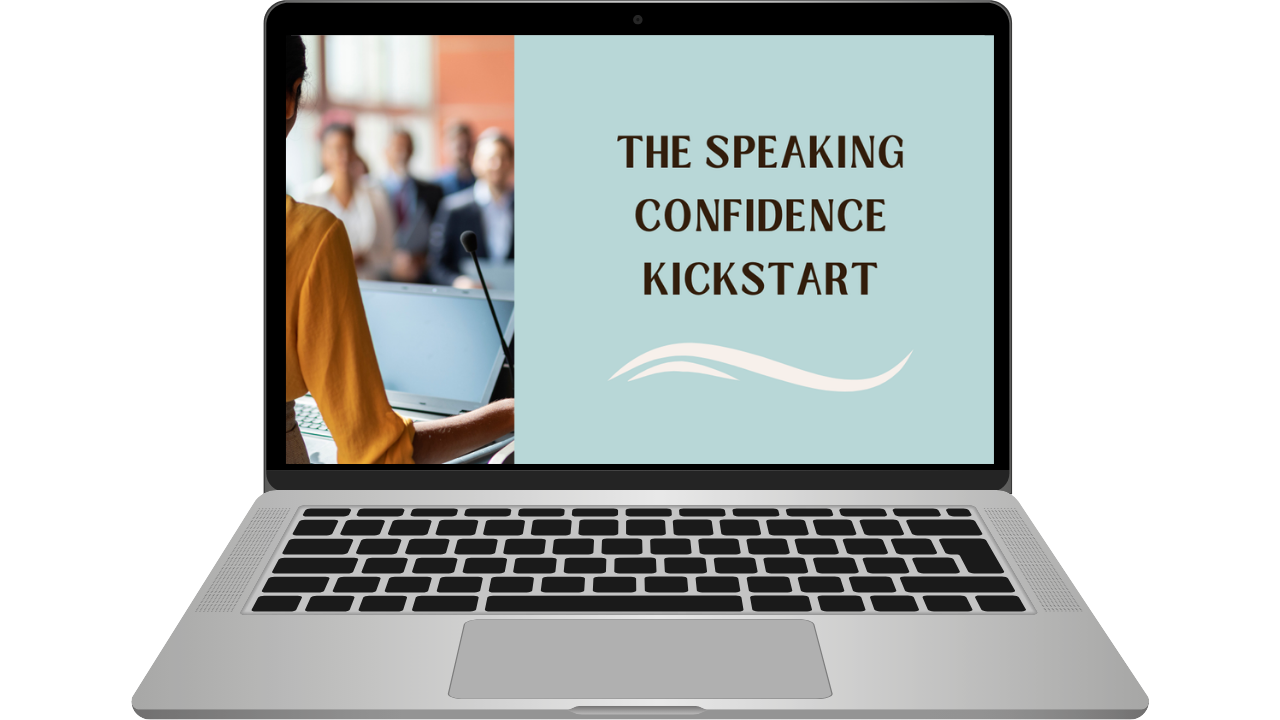
FREE MINI-COURSE: The Speaking Confidence Kickstart
A short starter mini-course to help you understand your public speaking anxiety, discover why traditional public speaking advice has not worked for you, and begin moving toward genuine speaking confidence.
GRAB THE FREE TRAINING