
How to Overcome Public Speaking Anxiety: The Hidden Cost of Fear and the Path to Lasting Confidence
By Victoria Lioznyansky, M.S., M.A. | Updated: January 22, 2026
Public speaking...
For some, it’s an exhilarating challenge. For others, it’s a nightmare. If you fall into the latter category, you’re not alone. In fact, public speaking consistently ranks among the top fears in the world, right alongside spiders, flying, and death.
If you’re searching for how to overcome public speaking anxiety, you’re probably not looking for surface-level tips or confidence tricks. You already know how to prepare. You’ve practiced. You may have even taken classes or workshops.
And yet, the anxiety still shows up the moment all eyes are on you.
But here’s the thing: public speaking anxiety isn’t just about a momentary feeling of discomfort. It’s not just the sweaty palms, racing heart, or dry mouth you experience before stepping into the spotlight.
The real cost of this fear runs much deeper, impacting every aspect of your professional and personal life.
If you’re letting public speaking anxiety dictate your decisions, whether it’s avoiding leadership roles, staying silent in meetings, or declining speaking invitations, it’s time to rethink the price you’re paying.
Let’s dive into the hidden ways this fear is holding you back and what’s possible when you finally conquer it.

Hi, I’m Victoria Lioznyansky, a TEDx speaker, leadership presence and public speaking confidence coach, and founder of Brilliant Speakers Academy®. I help senior professionals and leaders communicate with calm authority under pressure, without faking confidence, relying on performance tricks, or pretending to be someone they’re not.
What Is Public Speaking Anxiety and Why It Feels So Overwhelming
It starts innocently enough. A meeting comes up where you’re expected to present, and you find a reason to let someone else take the lead.
Or you avoid applying for that leadership role because it involves regular speaking engagements.
Over time, these small decisions accumulate, creating a life where you’re playing smaller than your potential.
But why does public speaking cause such intense anxiety?
At its core, public speaking anxiety is a primal fear. It’s the fear of being judged, of making mistakes, or of exposing yourself to criticism.
Evolutionary psychology tells us that humans are wired to fear being singled out in front of a group, it once signaled vulnerability and danger. While modern society doesn’t involve predators lurking in the shadows, the fear of being “watched” and judged remains.
What makes this fear so dangerous is that it often operates beneath the surface. You might not consciously connect your reluctance to speak with its impact on your life. But rest assured, the costs are there, and they’re significant.
The Hidden Cost of Public Speaking Anxiety in Your Career and Life
1. Missed Leadership and Career Advancement Opportunities
In the professional world, communication is power. Whether it’s presenting your ideas in a meeting, leading a team, or speaking at a conference, your ability to communicate effectively is what sets leaders apart.
When you shy away from speaking opportunities, you inadvertently signal to your colleagues and superiors that you’re not ready for more responsibility. You may have all the skills and qualifications for a promotion, but without the ability to confidently share your ideas, you can easily be overlooked.
I’ve seen this pattern play out repeatedly, and how overcoming public speaking anxiety can completely transform careers, which I share in my podcast episode.
If you want to hear real career transformation stories and how this shift actually happens, I break it down here:

Example:
One of my clients, a senior manager at a multinational company, found himself consistently passed over for promotions. The feedback he received was, “You need to speak up more.”
His fear of public speaking made him hesitant to contribute in meetings, despite his extensive expertise.
After working together to reframe his mindset and develop unshakable speaking confidence, he was able to lead high-stakes presentations that directly resulted in his promotion.
2. How Public Speaking Anxiety Limits Business Growth
For entrepreneurs, public speaking anxiety is more than a personal hurdle. It’s a business bottleneck. Whether it’s pitching to investors, networking with potential clients, or sharing your story on a podcast, your ability to communicate impacts your brand and bottom line.
When you avoid public speaking, you limit your visibility and miss out on opportunities to connect with your audience on a deeper level. In a world where authenticity and personal branding are key, staying silent isn’t an option.
Example:
I vividly remember my early entrepreneurial days a few decades ago when I started my first side hustle, a small web development company. Despite having extensive experience and expertise, I struggled to speak with confidence. Potential clients sensed my hesitation, and it affected their trust in me and, ultimately, my bottom line.
In comparison, I grew my most recent business, Nutty Scientists of Houston, from zero to #1 Nutty Scientists franchise in North America. The difference? I learned to speak with authority, influence, and impact. And my company grew by leaps and bounds.
3. The Financial Cost of Avoiding Visibility
The ability to communicate effectively doesn’t just enhance your career or business. It directly impacts your earning potential. Studies show that professionals with strong communication skills earn significantly more over their careers than those who struggle with public speaking.
This makes sense: employers and clients are more likely to invest in people who can present their ideas clearly, negotiate effectively, and demonstrate leadership through confident communication.
When you avoid public speaking, you’re not just dodging discomfort, you’re leaving money on the table.
Whether it’s negotiating a raise, landing a high-paying client, or making a compelling pitch for a new project, your fear of public speaking can prevent you from fully realizing your financial potential.
Example:
One of my clients, a senior software engineer, had been with his company for nearly a decade. While he excelled in his technical role, he avoided speaking up in meetings or presenting his ideas to upper management. His colleagues often praised his innovative solutions, but because he never advocated for himself or shared his successes publicly, his contributions were frequently overlooked.
When it came time for annual reviews, his fear of public speaking worked against him. While he hoped his work would "speak for itself," his lack of visibility made it easy for others to overshadow his accomplishments.
Over the years, he watched colleagues with similar or even worse skills but better communication abilities earn promotions and higher salaries.
Realizing he needed to make a change, he sought help to overcome his public speaking anxiety. By addressing his mindset and practicing techniques to boost his confidence, he was promoted to a higher role with a significant salary increase within a year.
This is a common scenario: your inability to confidently communicate can lead to missed promotions, lower performance reviews, and stagnant earning potential.
When you learn to articulate your value effectively, you open the door to higher salaries, lucrative opportunities, and greater financial success.
FREE GUIDE
We respect your inbox. No spam. Unsubscribe anytime.
4. How Fear of Speaking Erodes Confidence and Self-Esteem
Public speaking anxiety doesn’t just affect your professional life. It takes a toll on your personal confidence and self-esteem.
Every time you avoid a speaking opportunity or struggle through a presentation, it reinforces a negative belief: “I’m not good at this,” or worse, “I’m not enough.”
Over time, this can snowball into a broader sense of inadequacy that seeps into other areas of your life.
The problem isn’t just the fear itself; it’s the self-doubt that grows each time you let fear win. This creates a vicious cycle: the more you avoid public speaking, the more you feel incapable, and the harder it becomes to break free.
Example:
One of my clients had built a solid reputation within her company for delivering creative, impactful campaigns. Despite her expertise, she struggled with speaking up in meetings or presenting her ideas to larger teams. She often found herself staying silent, even when she had valuable insights to contribute, because she feared stumbling over her words or being judged.
It didn’t help her self-esteem that English wasn’t her first language.
Over time, her hesitation began to affect how she saw herself. She started second-guessing her abilities, questioning whether she was as capable as her colleagues. What began as fear of public speaking slowly eroded her confidence in her professional skills.
When she decided to tackle her public speaking anxiety, she discovered how deeply her fear was tied to her self-esteem.
Through coaching, she learned techniques to shift her mindset, reframe her fear, and prepare in ways that made her feel secure and confident.
Today, she not only speaks confidently in meetings but has also stepped into a leadership role where her ideas are valued and respected.
Her journey shows that overcoming public speaking anxiety is about more than communication. It’s about reclaiming your sense of self-worth.
5. The Long-Term Impact of Staying Silent When Your Voice Matters
Every professional has unique insights, expertise, and stories that can make a difference. Whether it’s inspiring a team, sharing a groundbreaking idea, or advocating for change, your voice has the power to create ripples far beyond the moment.
However, when public speaking anxiety silences you, the world misses out on the value you bring.
Missed impact doesn’t just affect you; it affects your audience—whether that’s colleagues, clients, or a broader community. Each time you choose not to speak up, you lose the opportunity to influence, inspire, and drive change.
Example:
Take another client of mine who worked for a non-profit and had spent years building her expertise. She had incredible knowledge and a passion for her cause, but she avoided speaking engagements because of a deeply ingrained fear of public speaking.
She would delegate key presentations to others on her team, even though she was the one with the most compelling vision and personal connection to the organization’s mission.
After she and I started working together, she began volunteering for speaking opportunities more and more. Fast forward a few years: she wrote a book about this topic, got invited to speak at many local, national, and international stages, and even hosts a small radio show.
She is now a very visible and vocal advocate for her cause. As a result, she has helped many thousands of people.
None of this would have happened if she hadn’t overcome her public speaking anxiety.

Why Traditional Public Speaking Advice Doesn’t Work
If you’ve tried to overcome your fear of public speaking, chances are you’ve been told to:
- “Practice, practice, practice.”
- “Fake it till you make it.”
- “Picture your audience in their underwear.”
While these tips might seem like good advice (after all, they’ve been around for decades), they do little to address genuine public speaking anxiety.
If you’ve been practicing and still feel anxious, that’s because managing symptoms isn’t the same as learning how to conquer fear of public speaking at the root.
Here’s what’s actually happening in your brain when public speaking triggers anxiety and why willpower alone can’t fix it.
The reason so many people struggle with public speaking fear even after going through classes and corporate training is because most approaches never address the real reason public speaking anxiety persists, which I explain in my podcast episode
"The Real Reason You're Still Struggling with Public Speaking Anxiety".
Why? Because they focus on surface-level symptoms rather than tackling the root cause.
Here’s the truth: Public speaking anxiety isn’t just a matter of skill. It’s a mindset issue.
Until you address the underlying beliefs and fears fueling your anxiety, no amount of practice or “faking it” will create lasting change.
How to Overcome Public Speaking Anxiety (What Actually Works)
If you’ve been wondering how to overcome public speaking anxiety for good, not just manage it, this is the part most advice gets wrong.
Public speaking anxiety is not a lack of skill.
It’s not a confidence flaw.
And it’s not something you fix by forcing yourself to “do it scared.”
At its core, public speaking anxiety is a conditioned stress response.
Your brain has learned to associate speaking with danger, such as judgment, exposure, rejection, and it reacts accordingly by flooding your body with fear signals: racing heart, shaky voice, blank mind.
That’s why simply practicing doesn’t cure public speaking anxiety. It only reinforces it.
To truly overcome public speaking anxiety, three shifts must happen.
1. Change How Your Brain Perceives Public Speaking
You cannot override anxiety with logic alone.
As long as your nervous system sees speaking as a threat, it will continue to trigger fear, no matter how experienced or prepared you are.
The first step is retraining your brain to stop interpreting public speaking as danger and start experiencing it as safe, familiar, and controllable.
When this shift happens, the physical symptoms begin to calm down naturally.
2. Build Genuine Speaking Confidence (Not Performance Confidence)
Most professionals are taught to perform confidence:
-
Speak louder
-
Use a power pose
-
Control your tone
-
Fake certainty
But performance confidence collapses under pressure.
Genuine speaking confidence is internal.
It’s the ability to stay grounded, clear, and present, even when the stakes are high.
This kind of confidence doesn’t disappear when something goes off-script.
It holds steady because it’s real.
3. Learn to Access Calm Authority Under Pressure
The final piece is learning how to access that calm, grounded state in real time — in meetings, presentations, and high-visibility moments.
This is where anxiety stops running the show.
Instead of fighting your nerves, you know how to regulate them.
Instead of overthinking every word, you speak with clarity and ease.
Instead of pushing through fear, you lead from presence.
This is the difference between coping with public speaking anxiety and actually overcoming it.
A Proven Framework to Overcome Public Speaking Anxiety for Good
The good news? Public speaking anxiety is not permanent. Once you understand how to overcome public speaking anxiety at the root, not just manage the symptoms, everything changes.
That’s why I teach my clients to use my Anxiety-to-Authority Framework™, a proven roadmap for creating lasting transformation and becoming a confident, captivating, and influential speaker.
This framework isn’t a quick fix; it’s designed to rewire your mindset from the inside out, creating a profound, life-long shift. It doesn’t just manage symptoms; it helps you overcome them at their core, empowering you to speak with unshakable confidence and ease.
That’s why my clients conquer their speaking fears for good, often seeing remarkable results in just weeks.
What Life Looks Like After You Overcome Public Speaking Anxiety
Imagine this: you walk into a meeting, your shoulders back and your head held high. When it’s your turn to speak, you feel calm, clear, and in control. Your words flow effortlessly, and you can see your audience nodding in agreement, captivated by your message.
This isn’t just a fantasy, it’s the reality waiting for you on the other side of fear.
When you conquer public speaking anxiety, you’ll:
🌟 Advance in your career by confidently taking on leadership roles.
🌟 Grow your business by connecting authentically with clients and partners.
🌟 Increase your income by negotiating from a place of strength.
🌟 Inspire others with your ideas and insights.
🌟 Feel an unshakable sense of confidence in every area of your life.
Take the First Step Toward Speaking with Confidence
The cost of public speaking anxiety is far too high to ignore. It’s not just about missed opportunities. It’s about the career, the business, and the life you could have if fear weren’t holding you back.
If you’re ready to stop hiding in the shadows and start stepping into the spotlight, I invite you to take the first step.
Book your public speaking strategy session with me, and let’s create a plan to obliterate your speaking anxiety for good and help you speak like the leader and expert you already are.
Your voice is powerful. It’s time to let the world hear it.
FAQ about overcoming public speaking anxiety
Why hasn’t practice helped me overcome public speaking anxiety?
Why do smart, high-achieving people struggle with this?
Can you actually overcome the fear of public speaking... or just learn to manage it?

About Victoria Lioznyansky, M.S., M.A.
Victoria Lioznyansky is a TEDx speaker, leadership presence and public speaking confidence coach, and founder of Brilliant Speakers Academy®, where she helps senior professionals, executives, and business leaders communicate with calm authority under pressure.
After building a successful corporate career as a manager and executive and founding multiple businesses, Victoria struggled with intense public speaking anxiety herself, despite being highly capable and experienced. Traditional public speaking and communication training did not address what was really happening under pressure, which led her to develop a deeper, psychology-informed approach to confidence and communication.
Today, through Brilliant Speakers Academy®, Victoria has helped hundreds of professionals strengthen their communication, eliminate public speaking anxiety, and step fully into their leadership presence without faking confidence or trying to become someone they’re not.
In her TEDx talk “Why Practice Doesn't Cure Public Speaking Anxiety” Victoria challenges the conventional wisdom that simply practicing public speaking more will automatically build confidence and explores what can happen when we repeatedly practice speaking while anxious.
➤ Watch Victoria’s TEDx talk “Why Practice Doesn't Cure Public Speaking Anxiety”
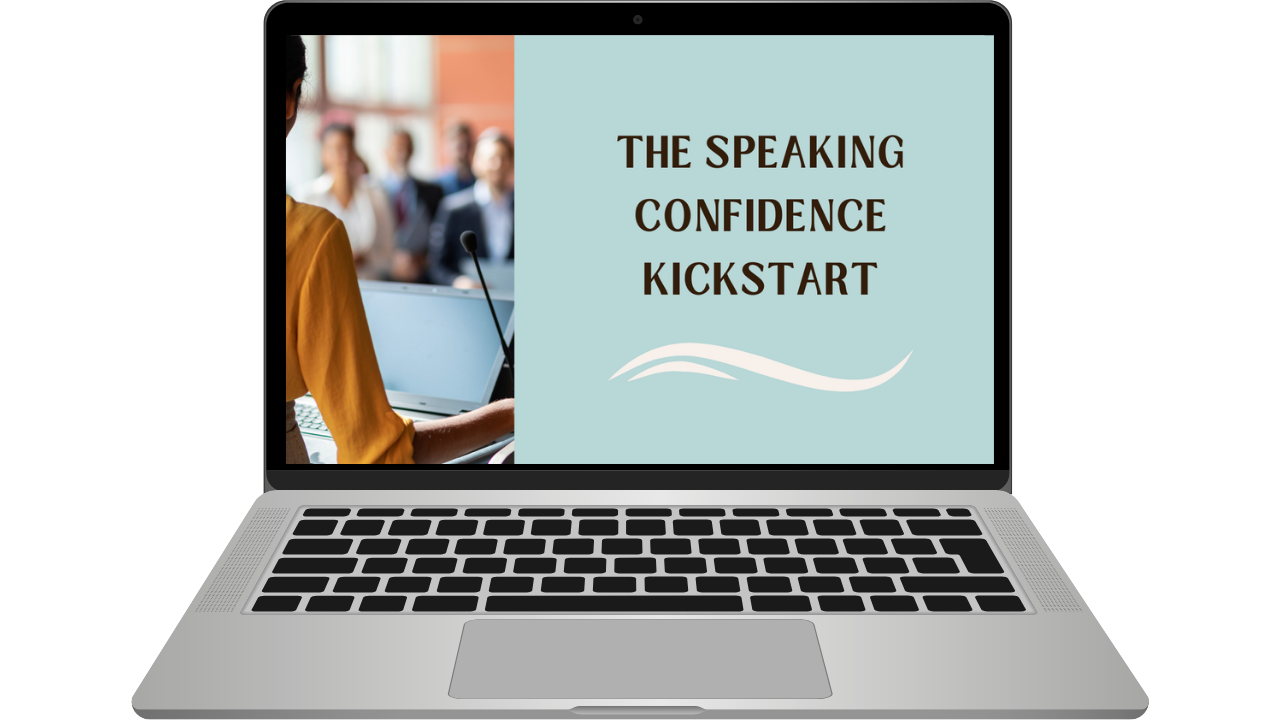
FREE MINI-COURSE: The Speaking Confidence Kickstart
A short starter mini-course to help you understand your public speaking anxiety, discover why traditional public speaking advice has not worked for you, and begin moving toward genuine speaking confidence.
GRAB THE FREE TRAINING