
How to Become an Authentic Public Speaker Without Faking Confidence
By Victoria Lioznyansky, M.S., M.A. | Updated: January 23 2026
Have you ever watched someone speak and thought, “If only I could speak like them, I’d finally feel confident”?
Maybe it’s the calm authority of Morgan Freeman.
The energy of Tony Robbins.
Or the deep connection Oprah creates with every audience.
Many people believe that becoming a confident speaker means sounding like someone else. Louder. More charismatic. More polished.
But authentic public speaking doesn’t work that way.
If you’re trying to become an authentic public speaker without faking confidence, the problem isn’t that you lack skill. It’s that you’ve been taught to perform instead of speak as yourself.
True confidence doesn’t come from copying someone else’s style. It comes from alignment when your voice, your message, and who you are actually match.
And the moment you stop trying to sound like someone else is the moment speaking starts to feel easier, calmer, and more natural.
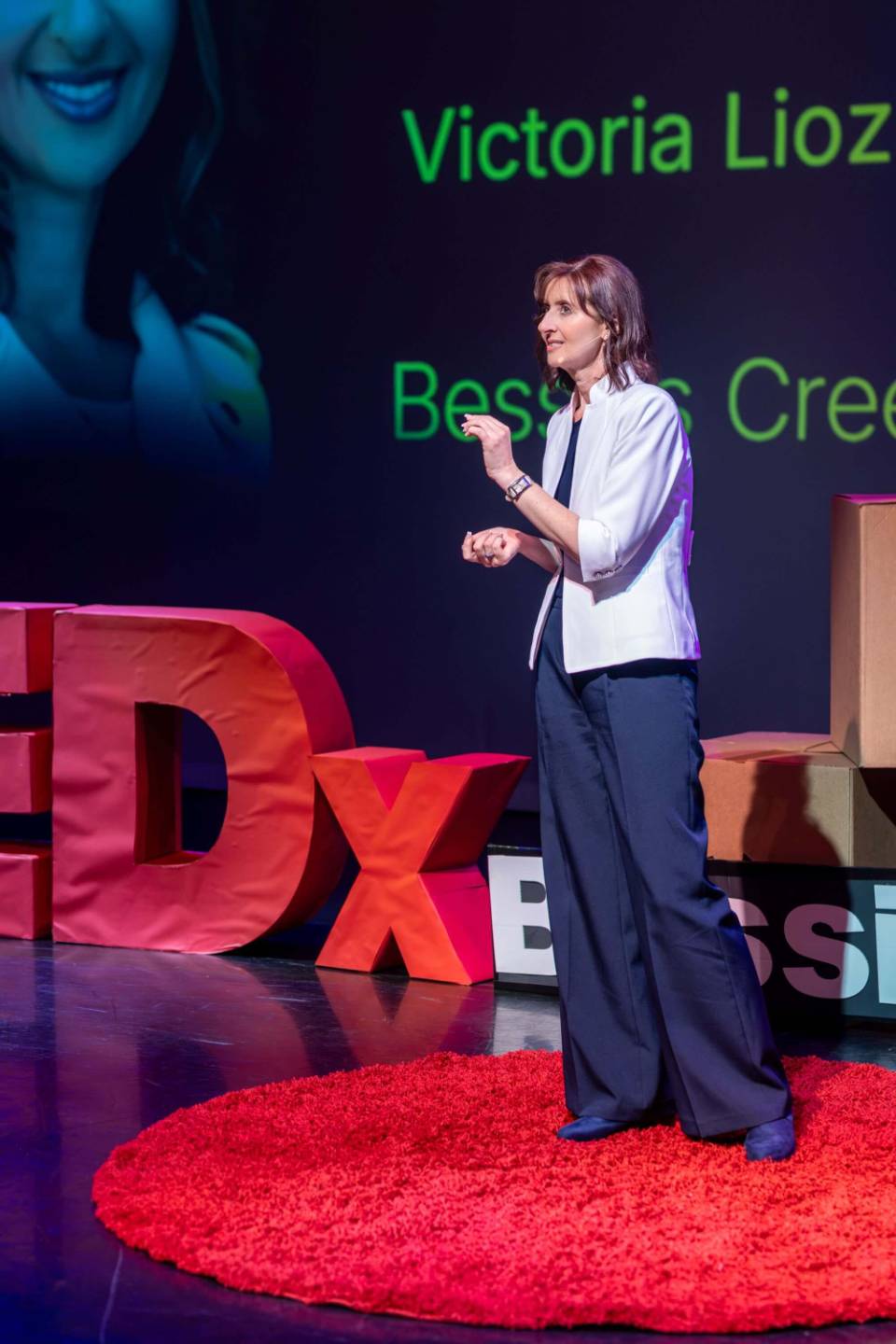
Hi, I’m Victoria Lioznyansky, a TEDx speaker, leadership presence and public speaking confidence coach, and founder of Brilliant Speakers Academy®. I help senior professionals and leaders communicate with calm authority under pressure, without faking confidence, relying on performance tricks, or pretending to be someone they’re not.
What It Really Means to Be an Authentic Public Speaker
Being an authentic public speaker doesn’t mean winging it or ignoring structure.
It means you’re not trying to manufacture confidence. You’re not putting on a voice that isn’t yours, forcing energy that doesn’t feel natural, or mimicking someone else’s delivery.
Authentic public speaking is when your confidence comes from internal safety, not external performance. You trust your voice because it’s yours, not because you’re trying to sound impressive.
The Confidence Trap: “If I Spoke Like Them, I’d Be Confident”
I hear this pattern again and again from high-level professionals, leaders, and entrepreneurs:
“I admire her confidence, but that’s just not me.”
“I wish I had his voice.”
“If I could speak like them, I’d finally feel ready.”
What’s really happening here isn’t a lack of confidence, it’s comparison.
When you measure yourself against someone else’s speaking style, you automatically assume confidence has a single look, sound, or energy. And when you don’t match it, you conclude something is missing.
In reality, this urge to copy others is one of the most common responses to unresolved public speaking fear. When fear is present, the brain looks for external “templates” to stay safe, which is exactly why so many people feel stuck even after years of preparation.
I break this down in much more detail in "How to Conquer Fear of Public Speaking: Why What You’ve Tried Hasn’t Worked Yet", where I explain why traditional advice actually reinforces this pattern instead of resolving it.
But confidence isn’t a personality trait you borrow. And it’s not a performance you grow into.
Real confidence emerges when your voice, your message, and your identity stop fighting each other.
That’s why the most compelling speakers in the world don’t sound alike at all.
Some are calm.
Some are intense.
Some are warm and conversational.
Some are quiet and deliberate.
What they all share isn’t style, it’s alignment.
To see what authentic public speaking actually looks like in practice, let’s look at six world-class speakers with radically different approaches. Each one effective. Each one unforgettable. Each one fully themselves.
Morgan Freeman: Calm Authority
Morgan Freeman doesn’t shout to get your attention.
He doesn’t pace the stage or raise his voice.
Instead, he speaks slowly. Intentionally. Every word feels like it matters.
What He Teaches Us:
You don’t need to be loud or overly expressive to hold a room.
His strength is restraint. It’s the unshakable confidence that comes from stillness, not showmanship.
For introverts or more reserved speakers, this is a powerful reminder that quiet presence can be magnetic.
Try This:
- Pause between key points.
- Let your voice drop, not rise, when you want people to listen.
- Trust that your presence is enough.
You don’t need to push.
You just need to stand in your message with clarity.
Tony Robbins: Energy in Motion
If Morgan Freeman is stillness, Tony Robbins is movement.
He’s a force. He doesn’t just speak, he charges the room with energy, intensity, and physicality.
What He Teaches Us:
When your body and voice align with your message, your audience feels it.
Tony doesn’t fake his energy. It’s authentic. It’s big. It’s powerful.
If you’re naturally expressive, don’t suppress that fire, instead channel it.
Try This:
- Stand when you speak, even on Zoom.
- Use your body to support, not distract from, your message.
- Speak with your whole self, not just your mouth.
Energy doesn’t need to be loud. It needs to be true. That’s what makes it stick.
Oprah Winfrey: Heartfelt Connection
Oprah speaks from the heart.
She listens deeply. She shares vulnerably. She makes people feel safe, seen, and understood.
She doesn’t perform. She connects.
What She Teaches Us:
People don’t follow speakers. People follow connection.
If you’re someone who leads with empathy, leans into conversation, or prefers storytelling over instruction, this is your lane.
Oprah proves that being emotionally present is more powerful than delivering a perfect script.
Her confidence doesn’t come from performance. It comes from permission — permission to speak exactly as she is.
Try This:
- Open your talk with a personal story or reflection.
- Make eye contact and soften your tone.
- Let your humanity come through, mistakes and all.
When people feel your heart, they trust your message.
Simon Sinek: Purpose-Driven Clarity
Simon doesn’t need flash or flair to capture attention.
He explains deep concepts with striking simplicity. And every idea ties back to a clear “why.”
What He Teaches Us:
When your message is clear and rooted in purpose, you don’t have to “sell” it.
People don’t need you to be flashy. They need you to be clear.
Clarity creates confidence. And confidence creates influence.
Try This:
- Before you speak, ask: “What’s the deeper purpose behind this message?”
- Strip your talk down to one core idea.
- Build everything around that one idea.
If you lead with purpose, your audience will follow.
Brené Brown: Brave Vulnerability
Brené doesn’t hide her fear. She walks through it, right in front of us.
She stumbles. She laughs at herself. She shares her failures.
And she draws us in with her honesty.
What She Teaches Us:
You don’t have to wait until you feel fearless to be effective.
In fact, the more real you are, the more relatable you become.
And when you're real, it's easier to speak with confidence, because you’re not pretending to be someone you’re not.
Your vulnerability isn’t a liability. It’s your greatest strength... if you own it.
Try This:
- Acknowledge your nerves before you speak.
- Share a moment you overcame something difficult.
- Don’t try to “be confident”, be present.
Authenticity wins hearts. Every time.
And if you're afraid of blanking out in the middle of your talk, here’s what to do when your mind goes blank during a presentation.
Michelle Obama: Graceful Power
Michelle Obama doesn’t demand attention.
She earns it with elegance, depth, and poise.
Her presence is quiet, but her impact is loud.
What She Teaches Us:
You don’t need volume to be powerful.
Grace is a form of strength.
If you lean toward calm, composed communication, Michelle shows that you can lead without theatrics.
Try This:
- Use stillness as a tool, not a gap.
- Let your tone stay grounded, not performative.
- Speak slowly, clearly, and with purpose.
You don’t have to fight for space. You simply need to own it.
FREE GUIDE
We respect your inbox. No spam. Unsubscribe anytime.
And if you’ve ever felt pressure to perform or be someone you’re not when you speak, especially if you’re an introvert, this video below will help you see confidence differently.

Why Copying Other Speakers Keeps You From Becoming an Authentic Public Speaker
Let’s be clear. Studying great speakers is smart.
But copying them? That’s where things fall apart.
Because when you try to imitate someone else’s delivery, your body knows.
Your brain knows. And suddenly, fear kicks in, not because you’re not prepared, but because you’re not aligned.
You feel like a fraud because you're not showing up as you.
This is why confidence is not about personality or style. I explain this more fully in Anyone Can Overcome Public Speaking Anxiety.
That disconnect is what triggers imposter syndrome, dry mouth, shaky hands, and blanking out.
This disconnect is also why fear shows up even when you are well prepared, which I explain in The Real Reason You're Still Struggling with Public Speaking Anxiety.
Confidence isn’t about performance.
It’s about authentic presence.
Bonus: A 3-Minute Confidence Exercise That Actually Works
Here’s something I teach all my clients, especially before high-stakes speaking moments.
It’s fast. It’s effective. And it works.
Step 1: Ask the right question
Not:
- “What will they think of me?”
- “Will I mess up?”
- “Do I sound smart?”
Instead:
“How do I want my audience to feel?”
This shifts your focus off yourself and onto your audience, which immediately reduces fear.
Step 2: Choose one feeling to anchor your talk
How do you want them to feel by the end of your message?
- Inspired?
- Safe?
- Energized?
- Seen?
Pick one.
Step 3: Speak from that intention
Let that emotional outcome shape:
- Your tone
- Your pacing
- Your content
- Your presence
When you’re speaking for them instead of about you, confidence comes naturally.
Final Thought: You Already Have What It Takes
Here’s the truth I want you to take with you:
You don’t need to become a different person to be a confident speaker.
You don’t need to be louder, bolder, funnier, or more “inspiring.”
You just need to strip away everything that isn’t you, and speak from who you already are.
Confidence doesn’t come from performance.
It comes from alignment.
And the moment you stop trying to sound like someone else and start trusting your own voice — that’s the moment you become a leader worth listening to.
Ready to Speak With Confidence Your Way?
If public speaking has been holding you back... if you know you’re capable of more but don’t know how to get there...
Let’s talk.
Book a free strategy call with me.
We’ll dive into:
- What’s blocking your speaking confidence
- What you truly want to say (but haven't yet)
- How to close the gap between the expert you are and the confident speaker the world sees.
Whether it’s coaching, group training, or a tailored step-by-step system, I’ll help you find the best path for you.
You don’t need to do this alone.
Let’s find your voice and your power together.

About Victoria Lioznyansky, M.S., M.A.
Victoria Lioznyansky is a TEDx speaker, leadership presence and public speaking confidence coach, and founder of Brilliant Speakers Academy®, where she helps senior professionals, executives, and business leaders communicate with calm authority under pressure.
After building a successful corporate career as a manager and executive and founding multiple businesses, Victoria struggled with intense public speaking anxiety herself, despite being highly capable and experienced. Traditional public speaking and communication training did not address what was really happening under pressure, which led her to develop a deeper, psychology-informed approach to confidence and communication.
Today, through Brilliant Speakers Academy®, Victoria has helped hundreds of professionals strengthen their communication, eliminate public speaking anxiety, and step fully into their leadership presence without faking confidence or trying to become someone they’re not.
In her TEDx talk “Why Practice Doesn't Cure Public Speaking Anxiety” Victoria challenges the conventional wisdom that simply practicing public speaking more will automatically build confidence and explores what can happen when we repeatedly practice speaking while anxious.
➤ Watch Victoria’s TEDx talk “Why Practice Doesn't Cure Public Speaking Anxiety”
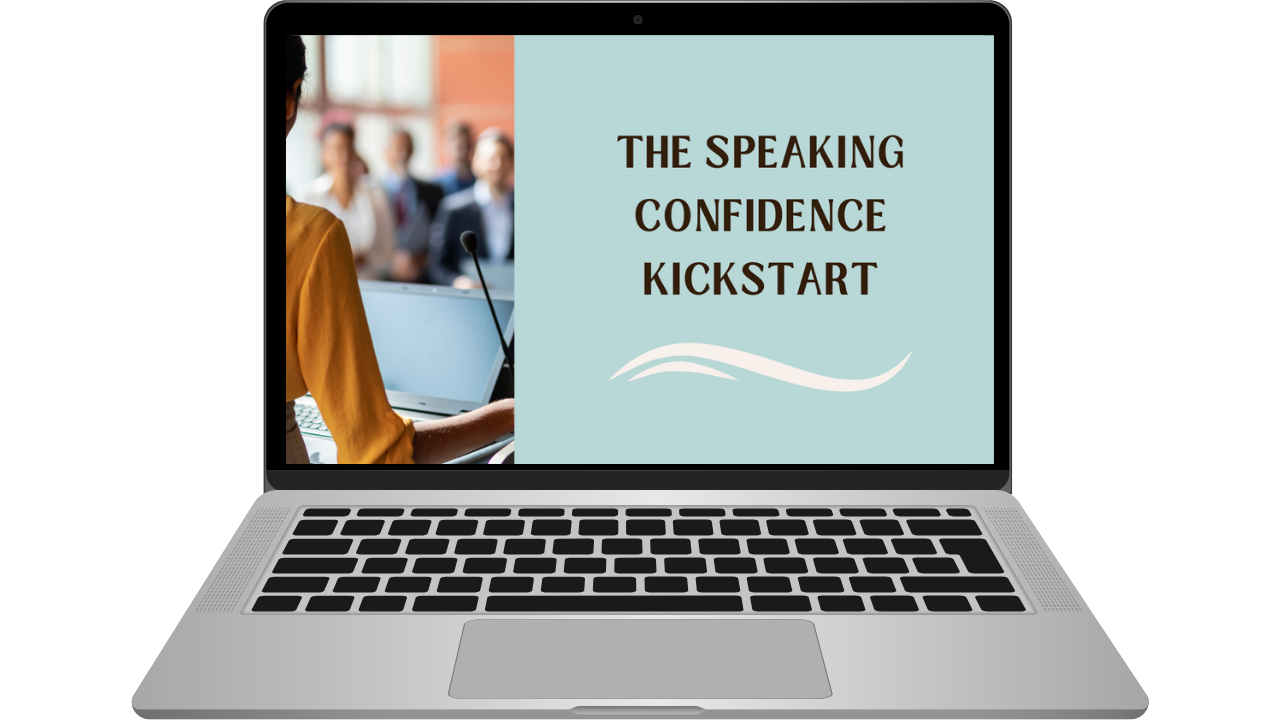
FREE MINI-COURSE: The Speaking Confidence Kickstart
A short starter mini-course to help you understand your public speaking anxiety, discover why traditional public speaking advice has not worked for you, and begin moving toward genuine speaking confidence.
GRAB THE FREE TRAINING